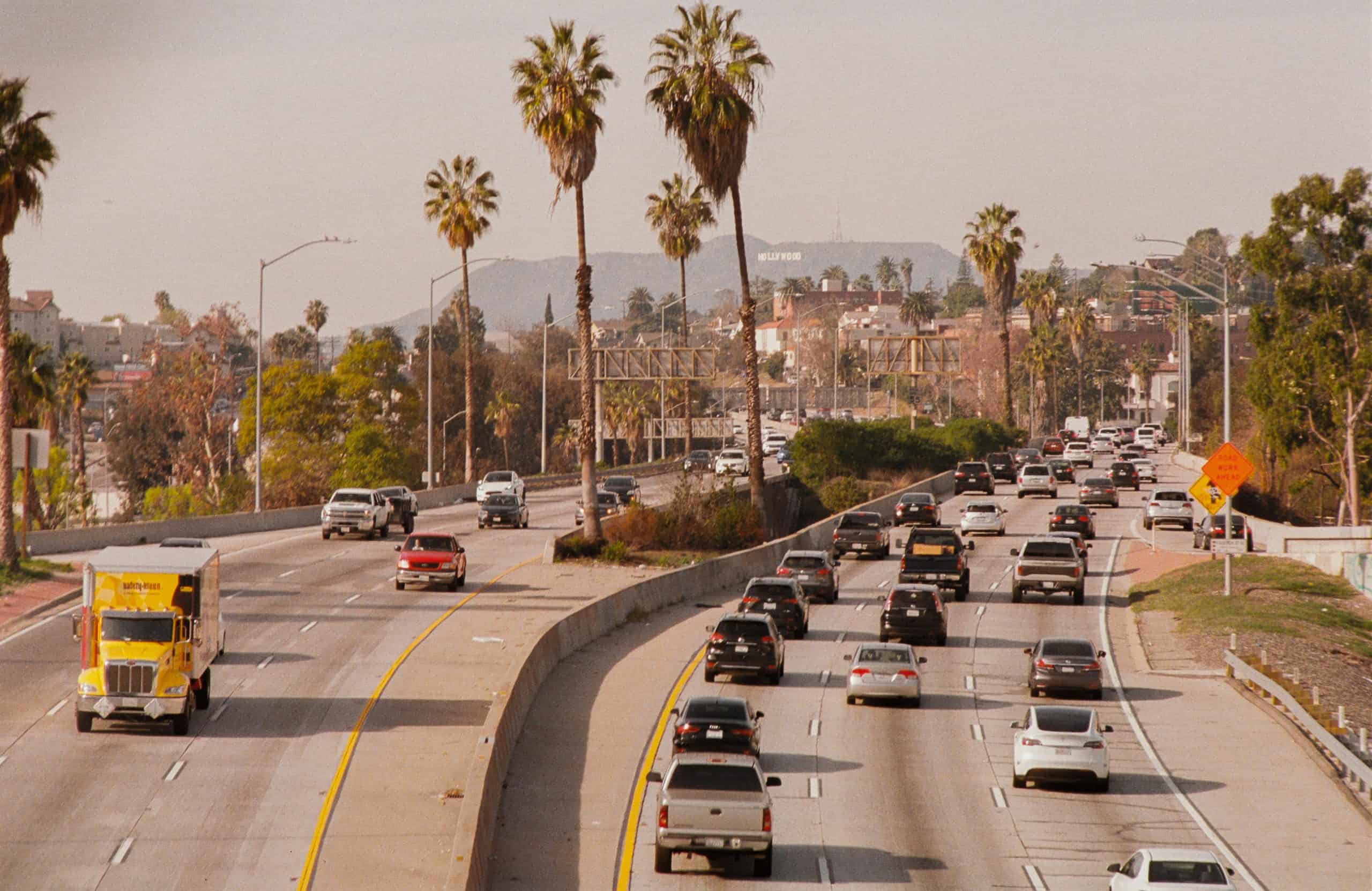
“Nobody rides public transport in LA.” Everyone reading this has likely heard the phrase. Many of you have said it. But Metro carries hundreds of thousands of Angelenos each day.
So who is this ‘nobody’?
Car culture in LA is a serious problem. The entire city is designed around the automobile. The culture of driving a personal vehicle runs deeper than the almost endless freeways. The process of driving a private vehicle in LA is more difficult than finding a parking spot on Sunset Boulevard. But the story of how LA got here is actually pretty fascinating and a little sad.
A City That Once Had It All
At the start of the 1900s, Los Angeles had one of the most advanced public transport systems. The Pacific Electric Railway was the main form of public transport, spanning over 1,100 miles of track and, at its peak, carrying 275,000 passengers. That is more than the New York subway handles today.

Then, in the 1940s to 50s, the focus in America shifted to individual car ownership and a car-owning culture. This led to the construction of the Interstate Highway System. The completion of new highways through Los Angeles provided a direct route to stores and other commercial destinations. As a result of the new highways, public transport was abandoned, and the train lines were dismantled, as the blueprints for the highways intended. The construction of new highways also demolished and destroyed black and brown neighborhoods.
Similarly, in the 1940s and 50s, the abandonment of public transport systems was racist and a result of an untold focus on economic development at the expense of the community.
Who Actually Rides the Bus?

Today, only about 6.8% of LA County’s 4.5 million commuters use public transit. But the people who do ride, they rely on it completely:
- About 84% of Metro riders don’t own a car
- Nearly 70% earn very low or extremely low incomes
- The average Metro rider brings home just over $19,000 a year
These people aren’t riding for fun. This is how they get to work, to school, to the doctor. They keep the city moving, yet often get the least support in return.
The Fare-Free Experiment

In March 2020, LA Metro took a bold, risky action by creating another fare-free transit system. For 2 years, riders could ride buses and trains for free. It was the largest experiment with a fare-free transit system in the country. Metro’s ridership spike reached levels seen before the pandemic, proving that LA, with its diverse population, is reliant on transit for travel.
This is most likely one of the main factors behind the complete removal of fares. With the removal of the rides’ free transit system, Metro saw a rapid decline in ridership.
Contrary to what most people think, revenue generated does not primarily fund Metro. In 2020, ridership revenue accounted for 6% of the total budget. That means that Metro has 8 billion from other sources to make public transport free.
Why This Fight Matters

The car culture in LA has a cost that touches everyone. It creates congestion that wastes time every week and creates pollution that impacts the economically disadvantaged areas the worst. Those who are most economically disadvantaged and are unable to afford a car incur the greatest cost.
Good transit flips that script. It opens up jobs, schools, and real opportunities across the city. It gets more cars off the road. It cleans up the air. And riding the bus gives you a side of LA you’d never catch from a car window — the neighborhoods, the people, the real city.
So What’s Next?
LA is at a crossroads. Car culture runs deep here. Change takes time. But fare-free transit, better routes, and serious investment in the system could shift things in a big way. The city had an amazing transit system once before.
It can build one again.
About the Author