Business

Imagine it’s midnight, and you’re starving. You’ve got everything on the couch. You’re definitely not cooking. You open a food delivery app on your phone. You see a restaurant called “Fisher & Son’s Fish and Chips.” It looks enticing. You go ahead and make the order. Your food arrives a few minutes later. (You know the rest).

But here’s the twist. That restaurant doesn’t exist. There are no dining rooms, no sign on the street, and not even a door you could walk through. Just a cook in a shared warehouse kitchen somewhere near the freeway. That’s a ghost kitchen. And LA is full of them.

What Is a Ghost Kitchen?

uber eats

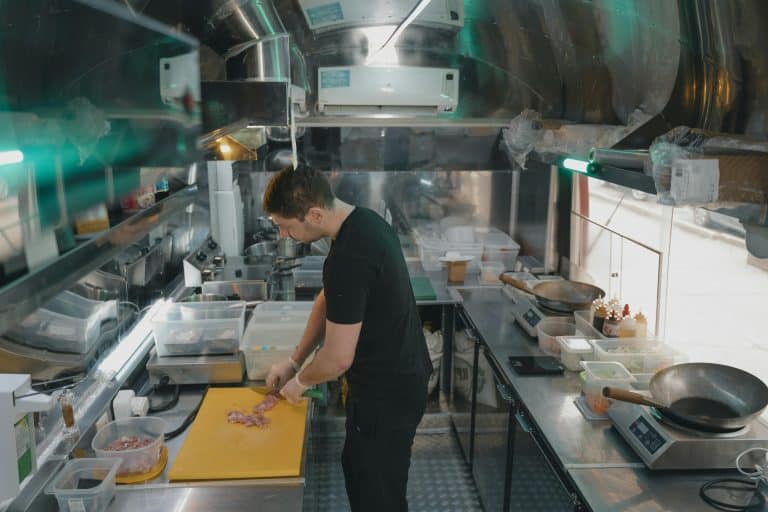
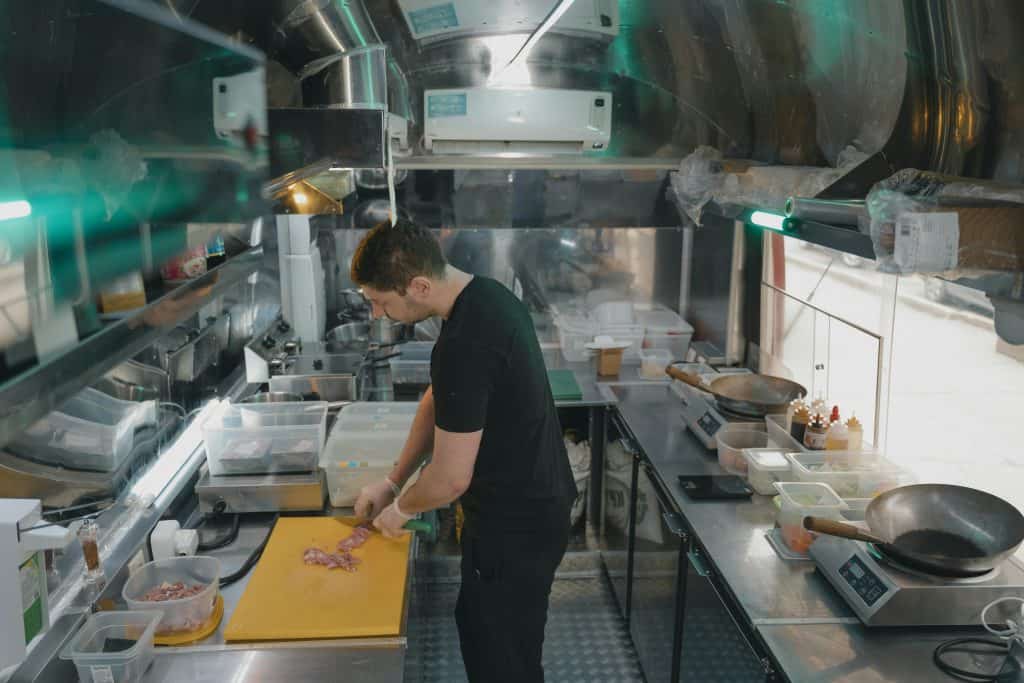
Ghost kitchens are commercial cooking facilities set up to prepare food solely for delivery. They handle food prep, packaging, and shipping for delivery apps like Uber Eats and DoorDash. They do not offer dine-in services and therefore don’t have a customer-facing setup, including tables or wait staff.

LA has one of the largest counts of ghost kitchens in the entire country. They are all over the city in places like old warehouses and deserted strip malls. It is likely that, without your knowledge, you have purchased at one of these locations.

One Kitchen. A Dozen Brand Names.
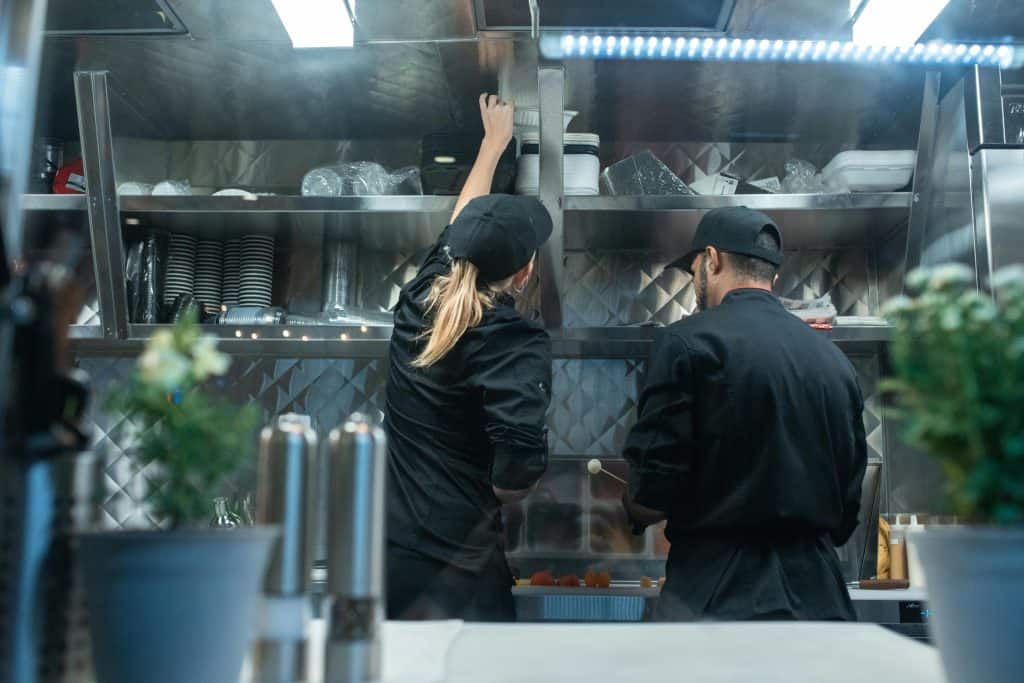
cloud kitchen in LA

A company called Byte to Bite runs over 30 delivery-only food brands from a single kitchen. “Fisher & Son’s Fish and Chips,” “Angel Wings,” “Nacho Lords” — all different names, all coming from the same crew, in the same space.

It’s like using multiple tabs in a kitchen. The food is real, just the separate “restaurants” are fake.

CloudKitchens has a different approach. It rents small kitchen units to food businesses. Each unit is a little bigger than a large walk-in closet. The business does the cooking. CloudKitchens handles the space and pickup logistics.

Uber co-founder Travis Kalanick invested $150 million in CloudKitchens and, by the end of 2019, the company was valued at $5 billion for just a few kitchens in a warehouse. That is a number that really catches attention.

Why LA Jumped on This Fast
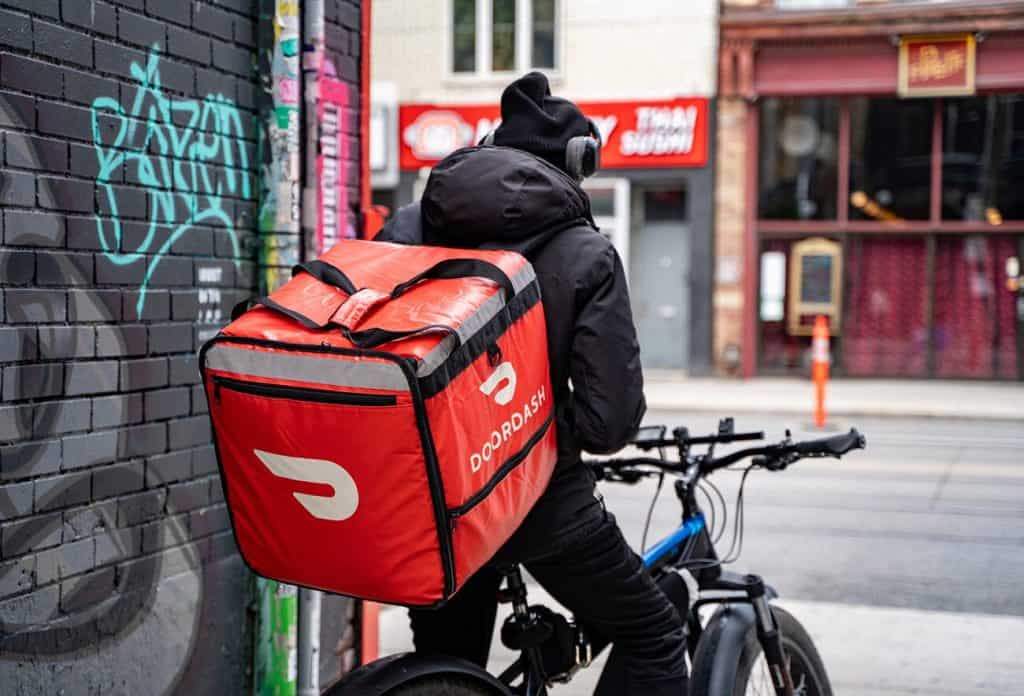
doordash food dilivery

Long commutes, congested schedules, and a large app-driven audience make delivery a necessity in LA. It was a perfect market for this model. During COVID-19, delivery saw a huge leap in popularity, with an over 170% increase in a year, according to the credit card research firm Cardlytics. Ghost kitchens have grown right along with it.

For food businesses, the appeal is clear:

  • Startup costs are much lower than those of a full restaurant
  • No dining room or front-of-house staff needed
  • Some brands can launch in under 30 days
  • Direct access to delivery app customers from day one

For example, a sandwich brand called Ggiata launched at a CloudKitchens location and cost about $20,000. For traditional restaurant openings, you’re likely spending 10 times that amount, or even more. At least for a startup, that cost is more reasonable.

The Part That Stings

Ghost kitchens sound like a great deal on paper. The reality hits differently.

You have no street presence. No foot traffic. No regulars peeking through the window. Your whole business lives inside an app. If someone doesn’t find you there, they won’t find you at all.
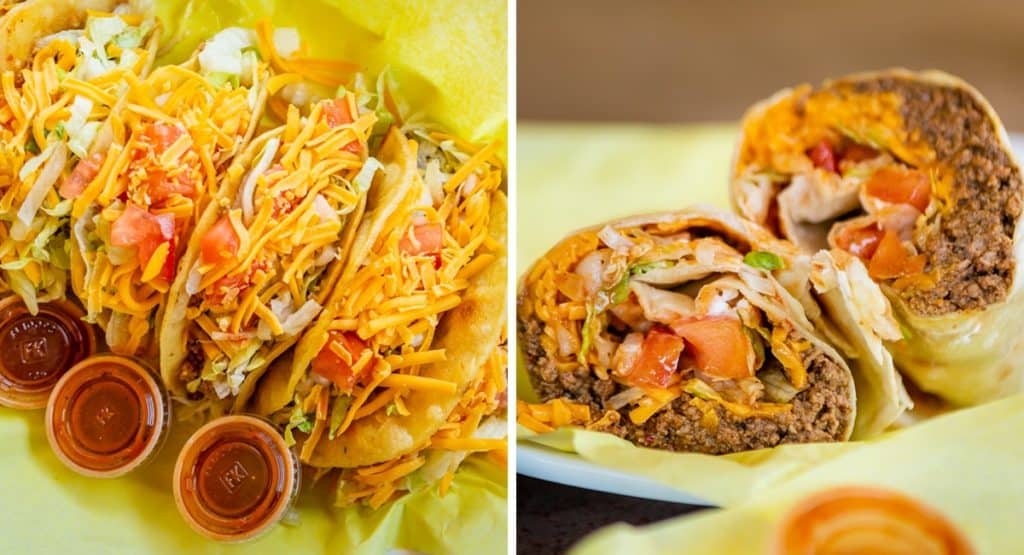
taco pete in compton

Aaron Jones, co-owner of the long-running Taco Pete in Compton, said it plainly: “If we didn’t have our original location, it’d probably be very difficult to make this work.” His family’s decades-old name gave them a built-in edge. A brand new chef trying to get noticed? Much harder.

The money math gets tight, too. Here’s what many ghost kitchen operators deal with:

  • Delivery apps take roughly 15% of each sale
  • Kitchen space fees add another 15% to 30%
  • Food costs and labor eat into whatever’s left

After all that, profit gets razor-thin. Fast.

So What Comes Next?

More and more restaurants are shifting toward accommodating ghost kitchens and delivery-only brands. In fact, some of these shared spaces are starting to look like food courts, complete with outdoor dining, pickup windows, and ordering kiosks.

Los Angeles has always had a rapidly evolving food culture. There’s no question that the emergence of ghost kitchens has made it cheaper to start a food business. However, an equally valid question has emerged: How can a restaurant remain successful without ever having a storefront?

That is a question that is still being developed. But next time you’re up late, ordering food, be sure to check the menu carefully. There’s a strong chance you’ll be ordering from a ghost kitchen.

If you drive for Uber, Lyft, or DoorDash in California, you must have’ve probably heard of AB 5 a lot. It has been treated as a hot topic for so many years. And in 2026, more changes are being seen again. For you, that can mean your day-to-day routine is affected in so many small ways.

So let’s break down the concept.

What Is AB 5?

AB5

AB 5 is a California law that was passed in 2019. With it, new rules were set for how workers had to be classified. Before AB 5, workers at gig companies like Uber, Lyft, and DoorDash were called independent contractors. With that label, health insurance was not provided, and sick days were not included. Unfortunately, the paid time off was also not provided. You get nothing. And if you have worked on those jobs, you have likely felt that gap.

AB 5 said that it wasn’t fair. It set up something called the “ABC test.” To call someone a contractor, a company needs to prove three things:

  • The worker is free from the company’s control
  • The work the person does is not the main thing the company does
  • The worker has their own independent business in that field

Uber and Lyft clearly failed that test. Their whole business is rides. DoorDash’s whole business is deliveries. The workers are the product. And that is pretty hard to argue with.

Then, Prop 22 Showed Up

AB 5 was not accepted without a fight by big gig companies. Uber, Lyft, and DoorDash funded a ballot campaign with over $200 million. That amount can sound out of this world, and I know you may pause on it. Proposition 22 was passed in 2020. Then it was passed by California voters.

Prop 22 carved out a special exception. App-based drivers and delivery workers stayed independent contractors. But the companies had to offer a few basic things: a minimum earnings floor, some health care help, and accident coverage.

Many drivers felt it wasn’t enough. Some liked the flexibility. But it was, and still is, a split opinion.

What’s New in 2026

Here is where the story turns. AB 1340 was signed into law in California in late 2025. Then, in January 2026, union rights were given to around 800,000 rideshare and delivery drivers in California. 

That’s huge. Drivers can now vote to form a union. The earliest that the vote could happen is May 2026. The Service Employees International Union has already started reaching out to drivers at airports and on social media.

Why Did Uber and Lyft Agree?

Good question. The rideshare companies actually dropped their opposition to AB 1340. But they got something in return. Senate Bill 371 cut the insurance they’re required to carry per incident from $1 million down to $300,000. That saves them serious money.

Lorena Gonzalez, who originally wrote AB 5, said plainly that Uber needed something. She further went on to say that it was a trade-off and nothing more. 

What This Means for Drivers in LA

ab5 affects on lyft and uber drivers in LA

If you are driving in Los Angeles right now, a short version can be given of what was changed:

  • You are still classed as an independent contractor under Prop 22
  • You are now given the right to unionize under AB 1340
  • A union vote can be held as early as May 2026
  • Better pay and conditions may be gained, but time is needed

The union process will not be finished overnight. Enough drivers need to be brought in. Names need to be signed. Votes need to be cast. But the door has now been opened. That is more than what was given two years ago.

Delivery drivers are included, too. DoorDash and similar apps work are covered under AB 1340 as well. So if food is being dropped off for a living by you, this law is meant for you, too. It is meant for me as well if I were doing the same job.

The Bigger Picture

AB 5 started a fight that is still ongoing. Drivers still want flexibility. Fair pay and basic protections are also being requested. Those two things do not need to be treated as opposites. The 2026 updates will not be used to fix everything at once. But for the first time in a long stretch, some power is being placed at the table for drivers in LA.

And that is worth attention.

As a large city, Los Angeles has its fair share of top veterinary hospitals and clinics. Here, we’ll go through some of the businesses that have attracted the largest share of positive reviews, making it easier for you to find somebody in LA to take care of your furry (or scaly) friend.

Veterinary Care Center

Located on Santa Monica Blvd., the Veterinary Care Center is regarded as one of the best veterinary centers in Los Angeles. They offer a full selection of services at their clinic. This includes surgery, dental treatments, microchipping, vaccinations, and more. They also have an in-house pharmacy staffed by graduates from top veterinary career schools, ensuring that when your pet is prescribed medication, they can begin their treatment right away.

Bay Animal Hospital

Bay Animal Hospital

Bay Animal Hospital is one of the oldest veterinary hospitals in Los Angeles. Located in Manhattan Beach, Bay Animal Hospital has been in business for over 30 years. This is one of the largest practitioners in the Los Angeles area, with 8 veterinarians, each with their own specialty, supported by 40 different employees. All vet services can be offered by the Bay Animal Hospital. It even has its own in-house laboratory and extensive diagnostic equipment that other vets can only dream of.

Bixby Animal Clinic

Bixby Animal Clinic is located in Long Beach. Since opening in 2005, this Los Angeles veterinary hospital has gone from strength to strength. This vet has long prided itself on the quality of care it provides its patients and the compassion it shows pet owners. Bixby Animal Clinic can offer the most common veterinary services on-site. They specialize in walk-ins and emergency care, with Bixby Animal Clinic ensuring pet owners always have someone looking out for their furry friend should their pet get sick.

Best Friends Animal Hospital

Best Friends Animal Hospital is a slightly smaller animal hospital located in Houma, LA. The team of veterinarians and support staff here offers medicine, surgery, dental care, and preventive care. As Best Friends Animal Hospital has an in-house laboratory, diagnosis is often quick and very affordable. This ensures that animals can receive the treatment they need as quickly as possible. In addition to their veterinary services, Best Friends Animal Hospital also offers full boarding for those heading out on vacation, which can be useful for pet owners with slightly older animals who may benefit from being close to a top animal hospital in LA.

The Melrose Vet

The Melrose Vet is located on Melrose Ave. in Los Angeles. While The Melrose Vet is one of the newer clinics in Los Angeles, it has some of the most experienced vets and support staff on-site. This means that The Melrose Vet can offer a wide range of veterinary services, including surgery, diagnostics, pet rehabilitation, dentistry, emergency care, and vaccinations. In June 2024, The Melrose Vet launched a new emergency treatment service, ensuring that pet parents can receive emergency care for their animals up until 11 pm every day.

LA Central Animal Hospital

LA Central Animal Hospital is operated by a small but dedicated team. The team at LA Central Animal Hospital can offer a variety of treatments to their animal patients. This includes surgery, diagnosis, and dental treatments. In addition to their standard veterinary services, LA Central Animal Hospital also offers animal grooming, dog training, and microchipping.

Los Angeles Veterinary Center

Los Angeles Veterinary Center

The Los Angeles Veterinary Center has two locations within the city. They can be found in both Boyle Heights and Jefferson Park. Both clinics are staffed by highly experienced vets and animal experts, ensuring that no matter where you take your pet, they’ll receive top-notch vet care. In recent years, clinics have started to offer remote diagnosis for animals (over video chat), speeding up diagnosis, making it more convenient, and, in many cases, helping pet owners save money. The vet can work with pet owners who may be dealing with financial hardship. They also support local aspiring students by hiring assistants who attend California vet assistant schools and programs.

Overland Veterinary Clinic

The Overland Veterinary Clinic is one of only a few clinics in Los Angeles open 7-days a week for standard diagnosis/treatments. Offering convenient opening hours, the Overland Veterinary Clinic offers all forms of veterinary services. Overland Veterinary Clinic has invested in the latest diagnostic treatments, too, including radiography. The clinic aims to keep pricing as transparent as possible, listing the most common treatment and diagnosis prices upfront on its website (prices for surgery may vary).

Quality Animal Clinic

Quality Animal Clinic has been serving LA residents for 10 years and boasts state-of-the-art equipment, ensuring fast diagnosis and treatment for animals. Quality Animal Clinic offers a full range of treatments on-site. Quality Animal Clinic mostly focuses on dogs and cats. They can, however, treat other animals if informed in advance.

Hollywood, sun, and summer all have one thing in common: the backyard swimming pool. Iconic, luxurious, and long associated with the good life, the swimming pool has become a symbol of Southern California, even with the hypnotic rhythm of the Pacific Ocean crashing just feet away.

If you want to learn more about the historic popularity of the California pool, browse state statistics, or find out how much it might cost to build your own backyard oasis, discover how you can get in on LA’s booming pool industry today. 

The Historical Popularity of Pools in Southern California

luxe backyard swimming pool tradition

Since World War II, Southern California, especially Los Angeles, has gained a reputation for its luxe backyard swimming pool tradition. A focus on the “Good Life” after wartime hardships made private swimming pools a popular pastime, with a booming postwar industry. The rise of the middle class, a renewed interest in consumerism, and an increase in more affordable pool materials, such as gunite, made it possible for the average family to do more than dream about installing their own backyard pool.

Although the area had a history of bathhouses and hotel pools, it was mid-century modern life that propelled in-ground pools in California into enduring popularity.

In fact, the rise of the pool appeal in Los Angeles began previously during the early days of Hollywood. In the 1920s, movie stars such as the Pickfords and Fairbanks, with their Beverly Hills pools, cemented the backyard pool in the popular imagination. Innovative architects like Frank Lloyd Wright also fused pools into their home designs. Within a few decades, in-ground pools had moved out of the realm of the elite and become synonymous with California life.

With Southern California abounding in pools by the 1960s, it’s no surprise that the area around the San Fernando Valley became known as the “swimming pool capital of the world.” From kidney designs to freeform shapes to other evolutions in architectural design and celebrity associations, the backyard pool and associated pool parties acquired their own recreational habitat and social significance.

With its history as a city of sun and air, the Los Angeles backyard pool became a private sanctuary, a personal park, and a family playground for the rich and famous, a place to retreat from the world and the scrutiny and dreariness of shared public spaces.

Since the heyday of the Silver Screen, the popularity of Southern California pools has not decreased, and today, California has more pools than almost any other state in America.

Here’s How Many New Pools Are Built in California Each Year

The number of new pools that are being built each year might surprise you. While Florida currently leads the way in new pool construction statistics, California follows closely in second place.

According to California Public Radio, California has some of the most swimming pools in the United States. As of 2025, California has 1,343,000 swimming pools. Experts expect this number to increase by 2030, despite new environmental standards. On average, 15,000 new pools are installed in California every year. It should come as no surprise that, as pool construction continues to boom, so do the service businesses that maintain the Los Angeles oases. Whether it is Pop’s Pool Service cruising in their pink trucks or the one-man show pool guy, everyone is clamoring to grab a piece of the Los Angeles pool service business that brings new clients year after year.

Residential in-ground pools are also being built at a faster rate than public or commercial pools or residential above-ground pools. It’s not hard to see why. In-ground pools have a sleek, aesthetic, and lifestyle appeal, offer greater durability, longevity, and versatility than above-ground pools with their shallow and deep-end options, enhance property value, and can serve as a permanent focal point in a backyard landscape.

Average Cost to Build a New Pool in Los Angeles

Wondering how much the average in-ground pool could set you back if you live in Los Angeles this year? Since pools are customizable, this number can vary based on several different factors.

If you want to build your own custom in-ground swimming pool in the City of Angels, you can expect to invest anywhere between $85,000-$150,000 on the project. Keep in mind that this range is just an estimate, since a luxury pool, especially one combined with a customized outdoor space, could cost $400,000 or more. It all depends on the site preparation, customization, features, materials, add-ons, and size of the pool you plan to install.

To help give you a better idea of what it costs to construct an in-ground pool in your area, it’s important to remember that larger pools set you back more, and concrete pools typically fetch a higher price tag than vinyl or fiberglass.

For example, a basic, medium-sized pool measuring 14 feet by 30 feet can average around $45,000, while a larger, 20 by 40-foot high-end pool with various features can land between $70,000 and $90,000, with walls, fences, and landscaping adding $125,000 or more. Custom pools, in general, range from $120,000-$160,000 even without any upscale custom features.

What your site requires to install an in-ground pool can also increase costs, with demolition, deep excavation, or extra grading factoring into the main preparation costs. Sloping backyards may require extra work or a retaining wall to level the site and make it secure. Interior finishes such as pebble, plaster, ceramic, quartz, or mosaic tiles can also affect the price, with mosaics costing more than usual ceramic tiles.

If you happen to live in a more affluent area of the city, these zip codes will reflect higher pool installation prices. In addition, anything necessary, such as permits or extras like lighting, heated pools, waterfalls, spas, fences, or automatic covers, can add to the final price. Want a customized landscape, a unique design, or extra safety features? Check with your contractor to determine how much this can boost your overall project cost.

Whether you’re looking for a high-end backyard pool experience or want to invest in a more wallet-friendly pool style, the right pool company can tailor your investment to match your budget, requirements, and style and increase property value for years to come.