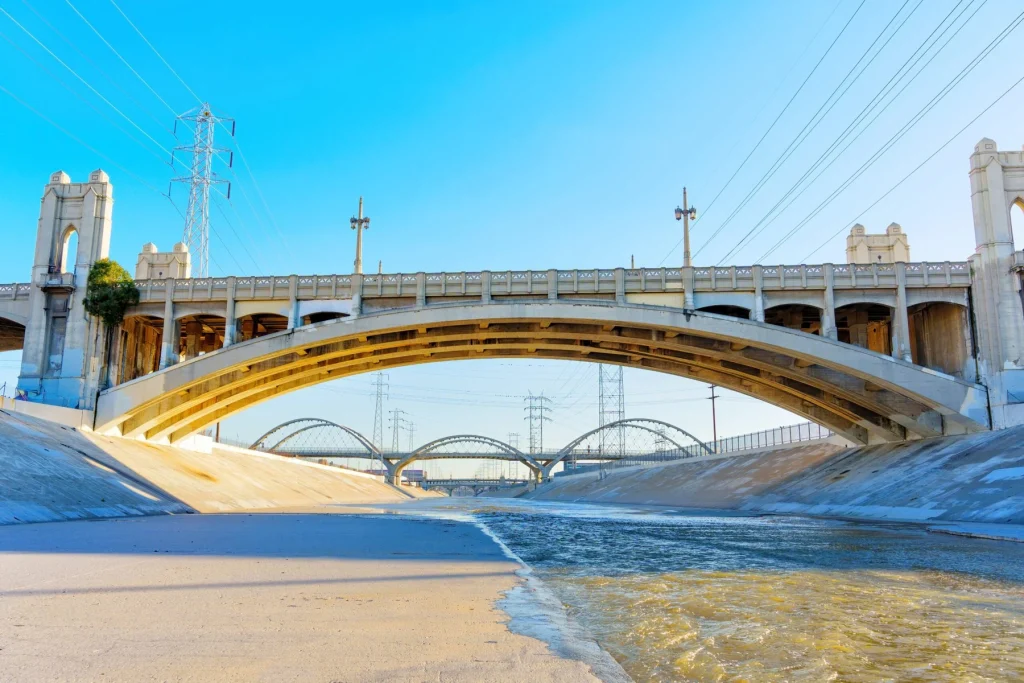
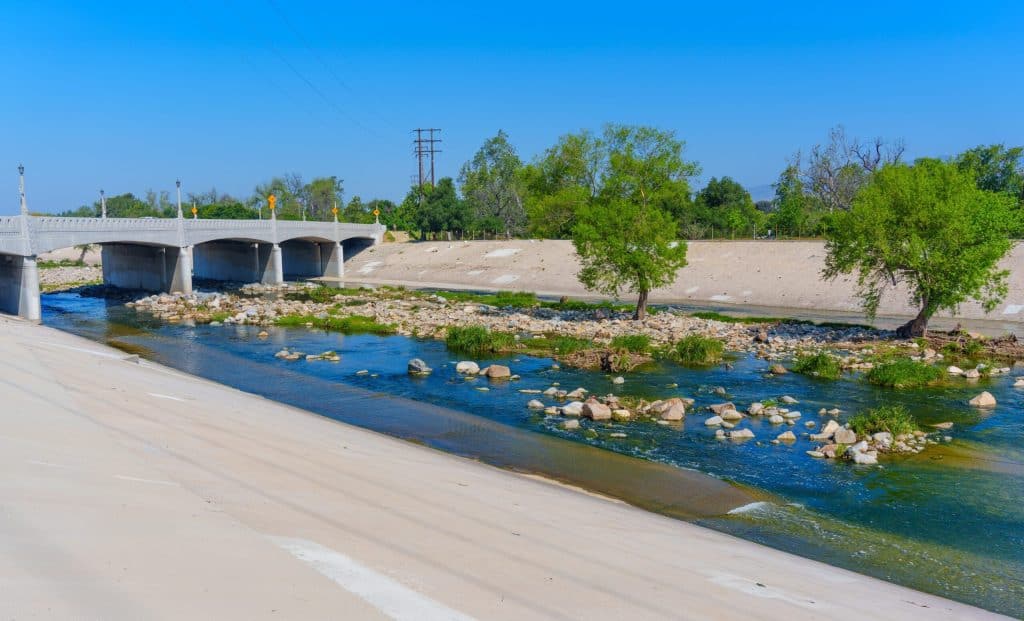
Picture a river that looks more like a parking lot than a waterway. That’s the LA River today. It’s 32 miles of flat gray concrete cutting right through one of America’s biggest cities. Not exactly the stuff of nature shows.
But that’s changing. And honestly? It’s been a long time coming.
What’s the Big Plan?
The Los Angeles River Revitalization Master Plan is one bold idea. The goal: turn all that cold concrete into real, living green space. We’re talking parks, trails, trees, birds — and even fish — all coming back to a river that forgot what it was.
The plan aims to reclaim over 750 acres along the channel. Here’s what that looks like on the ground:
Restored natural habitat for birds and animals
Cleaner stormwater before it reaches the ocean
A connected network of parks and walking trails
Green streets that link nearby neighborhoods to the river
Signature bridges, gateways, and public art throughout
That’s a whole lot of goods packed into one plan.
The river restoration happens in stages. Improvements go in at the top of the bank first. Then the work moves down toward the channel bottom as the city finds better ways to slow and store water. The end goal is to bring back fish habitats — steelhead trout, especially — and get vegetation growing again to support local wildlife.
More Than Just a Pretty Park
Fixing the LA River is great for the local economy, too. The numbers are pretty wild. Estimates put the economic boost at $2.7 to $5.4 billion in new development. Up to 18,000 new jobs could follow. The city could also see up to $81 million more in tax money every year.
Turning a forgotten stretch of concrete into a real community asset pays off big. No small feat for a river most people drive over without a second thought.
Cities That Did It First
Other cities have done it first. Seoul, South Korea, is the best example. All the way back in 1976, the Cheonggyecheon River was covered by a freeway. Not a bridge, a paved-over river. Then, in 2001, the freeway was removed, and the river was returned to the city. Wildlife returned in a matter of years. People also experienced improved air quality and less heat because of the river. 90,000 people visit the river every day.
Napa County is an even simpler example. Napa County was the first to take action on the river. They restored 15 miles of the Napa River and created an additional 135 acres of flood plain. The wildlife came back, the people loved it, and it became the largest wildlife and habitat restoration project in the state. LA has a lot to learn from Napa and Napa County, CA.
Paying for It All
Big dreams need real money. Luckily, LA already has solid funding in place:
Measure W created a property tax that raises about $300 million a year. That money goes toward capturing and cleaning stormwater.
Measure M funded a $356 million central path that runs right along the river.
These are real dollars behind a real plan. The city means business here.
Why You Should Care
Should you live in Los Angeles (or plan to visit), this project will change your perception of the city. Currently, the LA River is largely unknown, obscured by fences and concrete as if trying to hide its presence.
In the near future, it will become the city’s central green lung, offering numerous opportunities for recreation, birdwatching, and riverfront relaxation on sunny afternoons.
The river never went away. It just needs a second chance. And from everything the plans show, that chance is finally here.
The LA Fashion District is a popular fashion hub packed with textile stores, fabric stalls, sample sales, and delicious eateries. It’s basically a huge outdoor mall space that’s exciting and rewarding to explore.
Whether you love textiles or are a fashion expert, the Los Angeles Fashion District has something for everyone. From food and fashion to accessories and perfumes, the District is also home to the biggest flower district in the U.S. Check out sample sales at the Gerry Building, hit up the buzzing outdoor market at Santee Alley, or discover designers’ hidden showrooms.
Check out our quick guide to the L.A. Fashion District to get the most out of your experience.
What to Know Before You Go
The LA Fashion District is one of L.A.’s top shopping destinations. It’s a must-visit for fashionistas, designers, and bargain hunters seeking eclectic items. While there are many online sources for fashionable deals from Depop, selling used and vintage items, to Duuupe, the site that offers affordable alternatives to luxury products, nothing beats the IRL hunt. For this, we find the main route to the L.A. Fashion District, which follows Santee Alley. It’s an open-air market spanning two blocks that features boutiques, street stall vendors, retail outlets, and more. It’s open 365 days of the year. The Fashion District is also near other local attractions, such as the Flower District, open to the general public, and art and entertainment venues, including the Orpheum Theater, the Avenue des Arts, and Escape Room LA.
What to See
The LA Fashion District can be a lot to take in. If you’re hitting up the area for the first time, here are the top places that you don’t want to miss.
Santee Alley
Where: Located between Maple Avenue and Santee Street and stretching from Olympic Boulevard to 12th Street
When: The best time to shop is from 9:30 am to 6 pm (some shops may close at 5 pm)
Santee Alley is a bustling market space packed with the latest fashions in clothing, shoes, jewelry, makeup, and perfume. It’s open year-round, rain or shine.
Flower District
Where: Between 7th and 8th streets at Wall Street and San Pedro Street
When: Monday, Wednesday, & Friday from 8 am to 12 pm and on Tuesday, Thursday, & Saturday from 6 am to 12 pm.
Spanning six blocks, the area is the biggest wholesale flower district in America. You can find tons of fresh flowers, greens, fillers, decorations, and floral supplies. Some stores charge a $2 admission fee for weekdays and $1 per person on weekends, while others are free. The California Flower Mall is free and open 7 days a week.
Textiles and Fabrics
Where: On 8th Street to Olympic Boulevard, located between Maple Avenue and San Julian St.
When: Typically open from 10 am to 5 pm
Sample Sales
Where: Located along 9th & Los Angeles streets, at the California Market Center (110 E 9th), Cooper Design Space, New Mart (127 E 9th), and the Gerry Building
When: On the last Friday of each month, typically from 9 am to 3 pm.
The Fashion District contains high-end designer showrooms with end-of-season samples at discounted prices. Pro tip: Come early, bring cash, and keep in mind that most samples come in sizes 2-4.
How to Get There
The Fashion District covers more than 100 blocks in Downtown Los Angeles. If you’re taking the Metro, hop the Blue Line to San Pedro Station, which will take you to the southern edge of the District. You can also take the D and E lines of DASH routes or use ride-sharing, bike-sharing, or dockless scooter services. The area also offers hop-on, hop-off bus tours and private tours, making it accessible to every kind of traveler.
Best Time to Get There
Most shops are open from 10 am-5 pm, while the Santee Alley stalls are open year-round during normal business hours. It’s always a good idea to check an individual store’s hours in advance.
Where to Eat
If you’re a foodie, Downtown LA is the perfect place to be. Grab lunch at one of these fantastic eateries or check out a list of restaurants from the L.A. Fashion District. Enjoy brunch at Poppy + Rose. Located in the Flower District, this restaurant offers great food and an Instagram-worthy ambiance. Don’t miss the flowers, the cute coffee mugs, or their scrumptious fried chicken. They even serve breakfast all day. Check out the Mexican-inspired cuisine at Cilantro Lime restaurant. From fried cheese taco shells to Hot Cheetos, quesadillas, or bacon-wrapped hot dogs, there’s something for everyone to love. Wrap things up with an artisan coffee from Cognoscenti Coffee roastery on South Olive Street near the California Market Center. For fine dining, head to Rossoblu, an authentic Italian restaurant with a Bolognese-inspired menu near Santee Alley.
Pro Shopping Tips
Get your bearings and plan before you hit the streets to snag samples and sample food from tasty eateries in the District.
Come early and plan to stay all day. Exploring the Fashion District isn’t a quick trip. Expect to spend at least 10 minutes navigating traffic and finding parking.
Ditch the stilettos. This neighborhood is best explored on foot, so wear comfortable shoes to get the most out of your visit.
Carry cash. Many vendors, retailers, and stallholders don’t take credit cards, so come prepared. Some bathrooms also require coins to use.
Bring a water bottle and a big tote. Since you’ll be on your feet and on the move all day, it’s important to stay hydrated. A tote bag can help you keep smaller purchases at hand without having to head back to the car. If you plan to buy a lot, consider bringing a collapsible cart.
Watch out for counterfeits. Keep an eye out for hawkers selling fashion fakes and save your money. It’s illegal to buy counterfeit goods.
Take a lunch break. There’s no need to shop till you drop when dozens of amazing coffee shops, popular lunch spots, and rooftop bars exist in the area.
Stick to the area between Los Angeles Street and Broadway for high-end items. Find couture items between 8th and 11th Streets.
Layer up. Since many stalls in the District don’t have changing rooms, wear light layers that you can easily remove if you plan to try on items.
Shop in bulk. Vendors are more likely to give you a discount.
All sales are final. Most items are sold in an “as is” condition and are not refundable.
Things to See Near L.A.’s Fashion District
While you’re in the locale, check out these other fun and historic sights close to the L.A. Fashion District:
Local French eatery Figaro Bistrot at Los Feliz invites passersby with its cozy indoor ambiance and relaxing curb-side tables.
Many residents claim that this quaint little bistro has the best escargots in the city. Other times, it’s common to see local influencers dropping reviews of their Steak Tartare and pastries on social media.
The cafe is usually swarming with regular patrons and teeming with first-time visitors to the neighborhood, too. Local TikToker Casey Kramer shared spot-on impressions of how tricky it is to walk past the curb when regulars are seated along the patio.
With over 50k likes and a few thousand reposts, the video has garnered quite the buzz among locals and fellow TikTokers.
For one, residents are all too familiar with the distasteful looks you get from some diners as you walk past the cane chairs lined up outside the establishment. And Casey’s followers agreed that her impressions of these diners were on the money.
Other viewers loved the characters she played while making these impressions. The artsy Instagrammer constantly on her phone and swiping through the latest filters, the singer-songwriter discussing the new equipment in his studio, and the small-time actor sharing about their next big break coming up soon were a few of the characters she nailed during the sketch.
Casey’s TikTok drew so much attention that some viewers latched on to the smallest and pettiest of observations. For instance, a handful of viewers pointed out her apparent mispronunciation of ‘Los Feliz,’ while others debated whether Figaro Bistro’s location qualifies as Eastside LA.
Either way, the somewhat viral nature of the video did bring a lot of attention to Casey, herself an actor and songwriter. “Honestly, I wasn’t expecting it to resonate with so many people. Moving forward, I’m going to be doing more impressions for sure!” she admitted.
Hal Miller was a criminal lawyer who died recently. He and my father have been friends since their teens. I knew him but never spoke with him in depth until sometime in the mid-90s, when I was doing a story for the L.A. Times. It was a story about the Eastside Boys, a group of black men born before 1940. My father and Hal were both members, but the latter was the group’s unofficial leader, expert, and historian. His house was like a permanent venue for reunions for years. But the yearly occasion wasn’t just a gathering; it was a homage to black life in Los Angeles in the early part of the twentieth century, which, when looking back, was its best years.
To grasp the magnitude of the gentrification taking over black neighborhoods in metropolitan L.A., it’s necessary to know what the Eastside meant to black people. Of course, not everything was ideal; racist tradition forced blacks to reside in different neighborhoods on the Eastside. The areas on the Eastside were west of Alameda Street and east of Main Street, and are currently called South Central. But despite the circumstances, the Eastside Boys, including Hal and my father, celebrated the gigantic possibility that L.A. seemed to offer, as they saw it from a small view of their surroundings. They celebrated it not only at reunions but every day of their lives.
The city was modern, with a sense of horizontalness, a mixed economy, and inexpensive homes. It looked like a place accessible to everyone, irrespective of color, class, or status, unlike New York or New Orleans. The climate also encouraged people to keep that belief because it’s moderate, and anyone from any climatic region can adjust quickly. The success of the Eastside community in the mid-twentieth century also increased hope for a better life, a hope that seemed to take form for future generations despite segregation.
It did happen; hope turned to reality in one way after the 50s and 60s civil rights movement, but it came with a cost. When restrictions on racial housing disappeared, the white community left the area en masse, leaving blacks in segregation once again. But prosperity continued, especially in the middle-class communities of Baldwin Hills, View Park, Leimert Park, and Crenshaw. These areas were off-limits to black people before.
As white people left the areas, they left Inglewood last and in large numbers. It was a different city for two reasons: first, it had historically opposed integration, and second, it was located at the extreme west if you consider Eastside. Though many white people left, a significant number of households remained even in the 1970s. Many blacks arrived and made the place their home, but the good life didn’t last long. Proposition 13, which limited the funding of various services, including public schools, had a disastrous effect. It later led to the onset of an epidemic in the form of crack cocaine, which was overseen by multiplying street gangs. The wave of immigrants from Mexico and Central America also changed the racial makeup of South Central and Inglewood.
As if all these weren’t enough, the rising cost of housing, sometimes called “the destabilizing force of the 21st century,” poses a threat and may take away any hope of a good life for the black community of L.A. The one factor, “affordability,” which made Eastside thrive, is no longer prevalent. Los Angeles is sharply vertical now, and only the wealthy and elites can afford housing. Besides, race and class are also intertwined, so anything expensive isn’t accessible to blacks as a group. The trend that the Eastside generation and Hal started is reversed now as the famed Los Angeles’ “good life” is scarcely accessible to blacks. The success the Eastside Boys saw and hoped would continue has stalled or been closed in most sectors. Various factors are pushing the black community out of blocks and neighborhoods.
Market Street In Inglewood
Return of White Community
This was an expected crisis, so nothing to be surprised about.
According to a study by the UCLA Luskin School of Public Affairs, the increase in housing costs and the decrease in wages are the two main factors driving the decline of South L.A. The price of houses is more than three times what it was in the 60s. The scarcity of jobs, the high cost of living, and rising home prices are among the reasons gentrification is taking over Crenshaw and starting to envelop Inglewood. The latter has become a much sought-after area in L.A. The real estate business has boomed in recent years, with housing costs soaring at least 63%, according to a study by Property Shark. The research also indicated that the catalog of two-bath, two-bedroom homes conveyed a sense of “suburbanity.”
Gentrification wasn’t an event that Hal and my father imagined when they were growing up in blossoming L.A. It is one thing about white people fleeing and entirely another thing about them returning. The phenomenon has, of course, been reshaping black neighborhoods historically – Bed-Stuy, Harlem, to name a few – but never to such a vast extent as now. It’s a fact to be worried about because the black population of L.A. has gone down to less than ten percent of the total population and poses a danger of being pushed out entirely.
Proposed Future Inglewood Development
The New Inglewood
The danger is more pronounced in Inglewood, where I grew up and reside today. It isn’t an ordinary black neighborhood in L.A. under threat. It’s a city with a 50% black population. But several factors, such as gentrification and impending economic and racial change, look very realistic for a place with its own culture, public image, school district, and government.
Many people, including my neighbors, say that even though gentrification has negative aspects, it’s the answer to reviving our image, which has been tainted for a long time. It’s also the perfect timing for a revitalization. There is plenty of development going on, as the city is home to a huge NFL stadium that will host two teams, the Chargers and the Rams. The surroundings consist of condos, various facilities, retail, and amenities. In a way, it looks like the phoenix rising from its ashes, promising to improve Inglewood. James Butts, the mayor, said that Inglewood is one city that has undergone a vast transformation in only 4 years from being a crime-ridden, jobless, and poverty-stricken city to something worthy and affluent.
However, there is one probable reality lurking around once the development is completed. The designs of gentrification in every area seem to oppose the idea of blacks and Latinos of Inglewood staying around to benefit from the revived city. If nothing is done, then the history of the black community, which thrived even under dire circumstances, could be wiped out.
But there is hope because something positive is happening, and one of the first steps towards that has been regarding the MTA rail line, which is under construction. Crenshaw Subway Coalition, a transportation justice organization founded by Damien Goodman, fought, and now the rail line is accountable to the communities of Crenshaw and Inglewood’s requirements. The organization has been working to oppose gentrification in both areas.
According to the coalition founder, every aspect is being transformed into something white people can accept and like. If it continues, then the people (blacks) who built the place and lived there for decades will be pushed out eventually. To prevent this catastrophe, the coalition plans to form a non-profit community land trust.
More Hurdles Ahead
But it won’t be easy, because black neighborhoods may have missed the opportunity. The leaders and politicians are at fault here because they depended heavily on government funding, but it hasn’t helped. Rather than relying on government financing, leaders could have sought private funding for development. It would have raised living standards and created stable jobs. Another reason for the missed opportunity is that black people often aim low in life just to survive and not to flourish.
If the community had been more forward-thinking and set higher goals, the scenario might have been different. The 1990s were when black neighborhoods could have done something and transformed the city. But that’s long gone, according to Michael Anderson, a developer and an architect.
Now, it seems that only gentrification or the return of whites can make things happen, such as safe streets, good schools, and ideal retailers. What black communities wanted and needed is slowly happening, but it’s coming at a high cost.
My uncle was one of the few people who obtained the Los Angeles dream. He bought a house in the 50s near Slauson Avenue, considered the demarcation line between white and black. His home was in the south of Slauson, and so he had a cross being burned on his property, but he stayed there.
Gentrification has many positive aspects, too. However, it doesn’t do much for black people because it involves them leaving and not arriving. There isn’t any neighborhood in L.A. to go to.
The 1940s in Los Angeles are tense. Anxiety and fear loomed across the country after Imperial Japan attacked Pearl Harbor in December 1941. The United States was at war, and making the situation even more critical was the news of UFO sightings! Imagine the chaos in people’s minds back then.
Los Angeles is not only home to Hollywood’s telltale but also has storytellers and fabulists. There are also a good number of conspiracy theorists who would love to delve into what happened in L.A. in the 1940s.
The “Battle of Los Angeles,” as popularly known, has a lot to unravel. It’s based on the rumored attack by Imperial Japan on the United States continent, but was shortly confirmed as a ‘false alarm.’
All these events led to the birth of conspiracy theories around it. Even more so with stories of people witnessing unidentified objects. Who wouldn’t be invested, given the tense atmosphere back then?
How It All Began
The “Mysterious Battle of Los Angeles” didn’t get its name. Going by the theories and related sources, it’s understandable why some people still revisit this event.
Let’s go back to how it all started. The year is 1942, and spring is around the corner, yet the country’s atmosphere is gloomy. After the shocking attack by Imperial Japan on Pearl Harbor in December 1941, there was a sense of anguish across the country.
There was also heightened fear and anxiety, and the skies were highly monitored. The first UFO sightings happened in Santa Monica and Culver City in early February 1942.
After hearing the incoming aircraft sirens, the residents of Los Angeles came out of their houses, thinking it was another attack from Japanese fighters. Only when they went out were they surprised by what they had witnessed. UFO sightings instead of Japanese fighter planes!
On February 23, there was a bombing from a Japanese submarine near Santa Barbara, firing thirteen shells. It created panic and fear among the residents. Given this attack, the U.S. coastal defense was ready for a potential attack.
It’s also reported that on February 25, 1942, an unidentified object was detected on U.S. Army radar off the coast of L.A. In response, orders were given to man the air defenses fully, and a citywide blackout was issued. However, upon hearing the warning sirens, many residents left their homes, completely ignoring the rules.
The smoke from the shells began to form in the sky, causing fear and panic across the city. It’s been reported that three people died of cardiac arrest, and there was also a report of traffic fatalities.
Para troopers and civilians admit to seeing enemy planes. There were also claims that a Japanese aircraft crashed in Hollywood. In short, it was pure chaos! A Japanese invasion was what many had expected by the next morning.
However, to everyone’s surprise, there was no sign of Japanese aircraft or ships. All these led to the mysterious Battle of Los Angeles.
What Really Happened on February 23, 1942, in L.A.?
One may never get a definite answer about what happened on February 23, 1942. People that night witnessed something mysterious or strange that has since become lore or an urban legend.
The military officials placed the responsibility on meteorological balloons, which were illuminated with silver lights. It was released the day before the incident. But then comes the question, why attack these balloons?
A 1983 Air Force study on the history of this event concludes that the military defenses at the time were anxious. Before the incident, there was already an attack by a Japanese submarine. Given the tense situation and high alertness, they might have mistaken the balloons for an aircraft and attacked impulsively.
UFO expert Bill Birnes, in an interview with P.R. Newswire, reveals that it wasn’t Japanese bombers. He explains that the object was flying too high, and people that day swore it was neither a balloon nor an aircraft. He said the thing glided and floated, concluding it was an unidentified foreign object.
What made the matter even worse was opposing narratives by the Navy and the Army. It only let The LA Times print an editorial with the headline: “This Is No Time For Squabbling.” Here is an excerpt from the editorial piece:
“What baffled historians may later describe as the great Los Angeles Air Raid mystery showed some signs yesterday of developing into a squabble between the Army and Navy over the question of whether there actually were any enemy planes, unidentified planes, or planes of any kind over this area between 2 o’clock and daylight Wednesday morning”.
Some even question whether it was all just to cover up the embarrassment of shooting a balloon. In fact, a soldier reveals that he was told to keep his mouth shut and go with the Japanese plane’s story. He was warned that if he talks about shooting a balloon, he will be put behind bars.
Locals who witnessed this incident have reportedly said different things. Some said it was a blimp, while others saw fifty planes. Also, many have rubbed it off by saying there was nothing much to it.
The Aftermath And Rise Of Conspiracy Theories
After much squabbling, when it was clear that it was nothing significant, the backlashes were furious. In fact, Representative Leland Ford demanded an investigation, as per the L.A. Times.
It’s been reported that around six people died the following morning. Some died of heart attacks, while others succumbed to car accidents. Additionally, many wardens were injured from falling shells. Also, some Japanese Americans were arrested on the pretext of being spies.
The incident overall has impacted innocent civilians, causing some to lose their lives. A Pasadena resident who witnessed the blackout says she will never forget that night. She was in a hospital undergoing labor when the incident happened. The halls were pitch-black, and the mothers were anxious as the nurses handed out the babies.
She went on to say that she will never know if the baby was hers, but retorts that it’s of less concern. However, it questions whether it was ethical or humane for the maternity nurses to do so.
This event also led to the rise of conspiracy theories. Despite officials and professionals stating that it was a human error, the lore ensues. Even with a rational explanation, it didn’t stop UFO enthusiasts from delving into this event. In fact, many theories began to circulate over the years.
The conspiracy theorists used doctored photos released by the L.A. Times at that time as proof of UFOs. They even went on to explain that this floating object could withstand gunfire because it was immune to it.
Skeptoid’s podcast host Brian Dunning reveals that conspiracy theories escalated in 1987 with the release of the Majestic 12 documents. The documents are now discredited, but one of them is an official government document.
It turns out to be a “Marshall/Roosevelt Memo” dated March 5, 1942, which claims that two alien aircraft were recovered from the battle of Los Angeles. Here is an excerpt from the document:
“This Headquarters has come to a determination that the mystery airplanes are in fact not earthly, and according to secret intelligence sources, they are in all probability of interplanetary origin“.
With this discovery, one can only imagine the excitement among the UFO community and the conspiracy theorists alike. Although the FBI has deemed these documents as bogus, they are highly regarded among UFO enthusiasts.
It’s possible people saw foreign objects that night. It’s also less likely that there was a release of a seaplane over Los Angeles from a Japanese submarine. Whether one accepts it or not, the ‘Battle of Los Angeles’ was more of a human error.
It’s understandable, given the situation back then. Everyone was on high alert, and there was fear. With the imminent attack from Imperial Japan back then, it’s understandable to act without thinking if there is any sign of threat. To err is human, and in this tense environment, it’s likely to happen.
Unfortunately, it happened, resulting in the loss of the lives of some civilians and injuries. The officials would have come clean, but instead, there was strife among themselves. Despite the officials’ clarification, the conspiratorial minds didn’t stop.
So much about this battle has been documented that it only allows conspiracy theorists to raise questions. Although official records may say otherwise, the mysterious Battle of L.A. will continue.
This event might be a human error, but it has led to the rise of the UFO community. It has become a reference for conspiracy theorists. However, it shouldn’t deter us from the fact that this whole incident was a human mistake. Many may agree or not, but the truth remains nonetheless.
Paul Smith had one thing in mind as he created the Instagram-famous Pink Wall: to be as recognizable and appreciable as the Eiffel Tower. Trademarked with Pink, the Iconic Wall stands vibrant and forever “Instagramable.”
Droves of people flock and keep leaning against the dazzling pink wall of Paul Smith’s Flagship store on Melrose Avenue. A group of friends, all women, wearing heavy makeup, dressed in expensive mini-skirts and stylish bucket hats, leaning into each other. They pose, putting on their best model faces, as a group member extends her long arm for that perfect We-fie.
Another woman in her early twenties, influenced by the latest pop culture, dressed in fancy sweatpants and a baseball hat, strikes a pose, tilting her head to the side, throwing up the popular mini heart gesture as her friends take pictures of her.
Well, it turns out the women have come all the way from South Korea to do their own pink wall shoots. Makes you wonder how on earth they discovered Paul Smith’s iconic Pink Wall.
“Instagram,” they yelled simultaneously while giggling to their heart’s content.
It’s estimated that at least 100,000 people journey to the store’s pink wall each year, all to take grandiose shots and upload them to Instagram. With how famously celebrated and globally recognized it is today, the pink wall is truly only second to the Great Wall of China in terms of being photographed, as Paul Smith claimed.
But while the iconic “pink wall” may as well be the center of attraction, Paul Smith’s own Flagship store, which sells suits for men and houses a collection of photography and sculpture for dreamers and art lovers alike, lies beyond it.
“I actually thought it was a makeup brand. Boy was I wrong,” exclaimed the clueless young adult from China who was so familiar with the “pink wall” yet had no idea what the store stood for. But can you blame her? Most people just come for the aesthetics and leave as soon as they take their picture. Would they be surprised if they discovered that it’s one of more than 300 retail store locations representing Paul Smith’s menswear label since his first store in 1970?
It’s known that the brand hasn’t exactly embraced or done much to reach this height of popularity, other than a few comments you’d find on various social media platforms. But one thing’s for sure, they have always refused to comment further.
While the brand wouldn’t have predicted that its iconic “pink wall” would blow up on social media a decade ago, Paul Smith had already dreamt of this building becoming a social media phenomenon.
“From all sides, Paul always wanted a building that would be remembered like the famous Eiffel Tower,”- Richard, Paul Smith’s assistant manager.
Paul Smith’s assistant manager added, “He is an intense Mexican architect, Luis Barragan’s admirer, and the color for the pink wall comes as an inspiration from Rosa Mexicano, Barragan’s signature pink.”
The Famous Rosa Mexicano is splashed across Mexico City and at the museum, which was once the former residence of Luis Barragan. Still, the thing about beauty is, it is without imperfections! No photographs are allowed inside the museum.
Even the man himself, Luis Barragan, was known to be colorblind, and his lover/assistant chose this shade of pink, making it even more special. It’s been said that the shade was specifically chosen to bring light to the surface, an old visual trick that lit up buildings that relied on skylights and windows for illumination.
The inspiration wasn’t taken for granted, since Smith’s work was up to the level of his icon; picture takers can easily create the perfect depth they aspire to in their photographs, moving forward and back.
“Our iconic pink wall has the perfect vibrant background and is placed perfectly facing the sun and light’s direction, making them hit faces while capturing moments,” Richard adds. “The brand’s color pink, pink ladies, is also trademarked, meaning it cannot be ordered from any paint stores without a code, which only I have.”
The Birth of Instagram came shortly after five years into Paul Smith’s move to Melrose Avenue, and by then, the pink wall had garnered all the attention since picture takers glowed spectacularly on their posts.
“The pink wall was meant for great heights and basically reached it overnight,” Richard explains. “It’s a gift and a curse that most of us in retail never get to experience, not that we hate it, but the cons outweigh the pros.”
The man Smith basically spends, give or take, $60,000 a year to maintain and preserve the iconic pink wall. It’s been said that they have to repaint it every three months. Since the wall needs cleaning, and hosing it down is not an option, their janitor, named Patrick, cleans it by hand.
With all the money spent each year and the attention it attracts, anybody in their right mind would think that the brand worships the wall and is used as the greatest marketing tool ever, and yet it couldn’t be further from the truth.
While the pink wall may be getting all the attention, the store is practically empty. But it’s not shocking since picture takers are generally teens and younger adults who can’t afford luxury clothing. Most shoppers are fancy-car owners who walk straight into the store and back without giving the iconic wall any clout, bringing a whole new level of gift and a curse.
“I’m that person the janitor calls at any time of the day with literally any issues, so if there’s an act of vandalism and such, I’m the first on the scene,” says Richard. “Since the multiple graffiti incidents and other issues that needed fixing, we’ve started taking measures to stop it from happening again.”
A street artist who went by the name Thrasher had graffitied the wall multiple times, and the last incident occurred at 2 am on the 12th of September 2018. “Go Fuck Your Selfie” was the words sprayed all across the wall.
The meaning behind the graffiti Thrasher so violently sprayed was to empower young women and tell them they didn’t need approval from social media or society. The idea, in a nutshell, was, “You’re all beautiful, don’t let any individual tell you otherwise.”
“Paul received an apology from Thrasher’s manager, and they even offered to pay for all the damage they’ve caused,” Richard says. “Although Smith refused and said that he wouldn’t be taking anything from them except their promise that they wouldn’t do it again, he followed it up with criticism.”
“No man should be telling a woman what is acceptable,” Richard added as he gave a quick laugh.
To prevent such incidents, the brand established a couple of rules to protect the iconic pink wall and hired security personnel to enforce them. Some of the rules the wall strictly enforces are that individuals are not allowed any props, costumes, or professional cameras, and that no feet are allowed to touch the wall.
There’s a sign posted that lists all the rules, along with the brand’s Instagram handle, their preferred hashtag, and a geotag. “We need to live by rules if we want good things to stay good,” Richard adds.
“The popularity and success the famous pink wall has gained throughout the years are monumental, and to leave without a picture leaning against the wall would disappoint culture.” With a rough estimation, Richard states that the visitors are in the majority, approximately 70 percent, are from across the pond.
Given the number of international visitors, it would be a shame to just stick with expensive clothing; even though some tourists, who appreciate Paul’s work, are delighted to purchase goods, most visitors don’t. To cater to all types of tourists, the store decided to sell a variety of souvenirs and other merchandise and to hand out free postcards and pins.
Even the hospitality shown at the store knows no bounds. “In good faith, the brand’s staff provides water to people taking pictures at the Instagram-famous pink wall if they come inside and certainly allows each one of them to use their restrooms.”- Yelp comments.
With people from all over the globe visiting this iconic pink wall, the traffic the street attracts is truly glorious, and all the other stores surrounding the wall have claimed that they reap the benefits as well.
“Been working at the Carrera Cafe for years now, and one thing I can positively say is that having the pink wall near your business is frankly a blessing in disguise,” says a barista.
But the attention couldn’t be better directed, since the picture-takers visiting the monument, the pink wall, have free Wi-Fi, bathrooms, and a place to charge phones at the cafe. It’s almost like it’s heaven for models and influencers blooming on various social media platforms.
While there have been myriad offers for Paul Smith to advertise various brands on their wall, they have been adamant in turning each one down.